Bone Conduction Headphones: How They Work, Hearing Safety, Sound Quality, and Buyer's Guide
An authoritative consumer evaluation of open-ear bone conduction audio: mechanical transducers, cochlea transmission, IP67 ratings, and real-world acoustic tradeoffs.


For more than a century, personal consumer audio has relied on a single, universal acoustic principle: an electroacoustic speaker driver generates air pressure waves that travel down the ear canal, vibrating the delicate tympanic membrane (eardrum), which in turn stimulates the ossicles to transmit sound to the inner ear. However, the rapid evolution of fitness technology, audiological research, and outdoor safety regulations has brought an alternative mechanism to mainstream consumer electronics: bone conduction technology.
By bypassing the ear canal and eardrum entirely, bone conduction headphones deliver sound directly to the cochlea through mechanical micro-vibrations along the zygomatic and temporal bones of the skull. Originally developed for military tactical communications and medical hearing aids, modern open-ear headsets have surged in popularity among endurance runners, urban cyclists, and office multitaskers. Yet alongside enthusiastic marketing claims, prospective buyers must evaluate real acoustic tradeoffs, hearing safety facts, and situational benefits.
| Acoustic Category | Bone Conduction | In-Ear ANC Earbuds | Open-Ear Air Conduction |
|---|---|---|---|
| Transmission Route | Temporal / cheekbone to cochlea | Air pressure through eardrum | Directional speakers aimed at canal |
| Situational Awareness | 100% (Ear completely unobstructed) | Very low (Physical seal + ANC) | High (Canal largely open) |
| Sub-Bass Response | Limited (Felt as physical vibration) | Deep, immersive acoustic resonance | Moderate, prone to roll-off |
| Ear Canal Hygiene | Zero moisture buildup, no wax impaction | Traps sweat, bacteria risk during workouts | Minimal ear contact |
| Ideal Applications | Running, road cycling, swimming, office | Air travel, gym, critical music listening | Casual podcasts, remote work calls |
The Underlying Biomechanics: How Cranial Vibration Transmits Sound
To understand bone conduction, one must understand that humans hear sound through two separate pathways: air conduction and bone conduction. When you speak, you hear your own voice deeper and richer than others hear it because sound waves travel simultaneously through the surrounding air and through the dense bones of your skull directly to your inner ear.
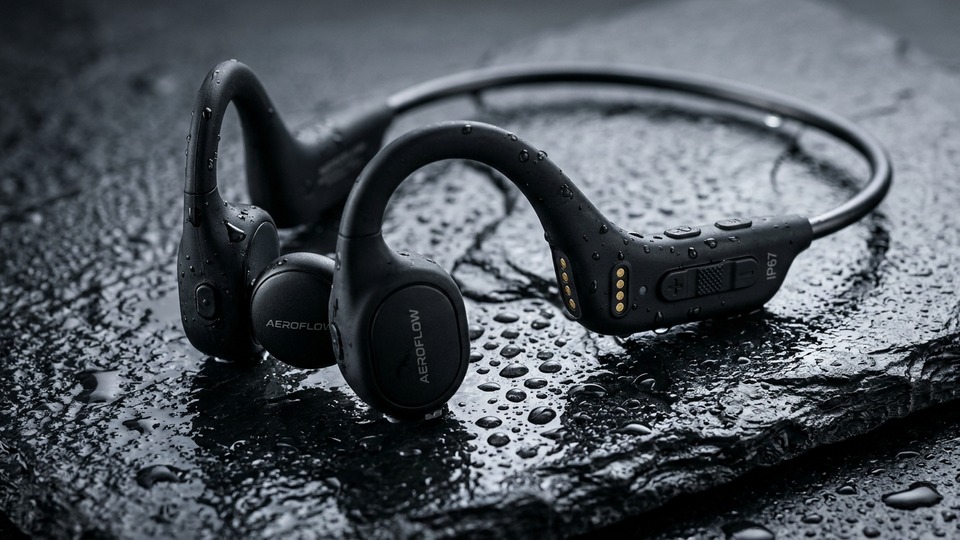
Bone conduction headphones harness this natural mechanism. Instead of conventional cone speakers with paper or polymer diaphragms, these headsets utilize electromechanical transducers encased in sealed enclosures. When an electrical audio signal passes through the voice coil, the transducer generates precise physical oscillations against the zygomatic arch (cheekbone) positioned just anterior to the tragus of the ear.
These vibrations propagate through the bone matrix directly to the fluid-filled cochlea. Inside the cochlea, thousands of microscopic hair cells (stereocilia) bend in response to the fluid movement, generating electrical impulses that the auditory nerve carries to the brain's temporal lobe. Because the tympanic membrane and middle ear ossicles are completely bypassed, individuals with conductive hearing impairments or damaged eardrums can frequently hear with remarkable clarity using bone conduction.
Hearing Safety: Debunking the 'Immune to Hearing Damage' Myth
A prevalent marketing misconception claims that because bone conduction headphones do not send air pressure down the ear canal, they are completely immune to causing hearing damage. Audiologists and otolaryngologists emphasize that this claim is factually false.
Noise-induced hearing loss (NIHL) predominantly occurs inside the cochlea, where excessive mechanical vibration damages the delicate hair cells. Whether that vibrational energy arrives via the eardrum or through the skull bone, loud volumes will stress the stereocilia. If a user listens to bone conduction headphones at maximum volume for extended periods, cochlear hair cells can still be irreparably sheared.
However, bone conduction offers significant medical advantages over traditional in-ear silicone buds:
- Elimination of Otitis Externa (Swimmer's Ear): In-ear earbuds trap sweat, heat, and moisture inside the canal during intense exercise, creating an ideal breeding ground for bacterial and fungal infections. Open-ear designs keep the canal completely ventilated and dry.
- Zero Cerumen (Earwax) Impaction: Constantly shoving silicone tips into the ear canal pushes earwax backward toward the eardrum, causing painful blockages. Bone conduction eliminates canal intrusion entirely.
- Eardrum Pressure Relief: Listeners sensitive to the unnatural cabin-pressure sensation caused by active noise cancellation (ANC) find open-ear audio significantly more comfortable over long multi-hour sessions.
Bone Conduction Audio: Real-World Pros & Cons
Key Advantages
- Unrivaled situational awareness for road safety near vehicle traffic.
- Exceptional stability during sprints, jumps, and trail runs without slipping.
- Complete comfort for glasses and helmet wearers with flexible titanium bands.
- High IP67 and IP68 ratings for sweat resistance and lap swimming.
Acoustic Tradeoffs
- Sub-bass frequencies cannot match the physical punch of sealed in-ear drivers.
- Slight audio leakage in quiet indoor rooms at volumes above 70%.
- Vibrations can cause a tickling sensation on skin at maximum volume levels.
- Compromised clarity on noisy subways or aircraft without foam earplugs.
Acoustic Fidelity: What Buyers Must Realistically Expect
Consumers purchasing bone conduction headphones expecting the warm, sub-bass rumble of high-end over-ear studio monitors or sealed in-ear silicone buds will inevitably face disappointment. The biomechanics of the human skull create a distinct acoustic profile: bone is significantly denser than ambient air, acting as a natural frequency filter that absorbs deep sub-bass energy while cleanly transmitting midrange and upper-frequency harmonics.
Midrange audio—particularly human dialogue, vocal harmonies, podcasts, audiobooks, and teleconference speech—reproduces with remarkable clarity. Spoken words cut through outdoor ambient noise without requiring elevated volume, allowing narrators and podcast hosts to sound remarkably intimate and articulate. Instrumental tracks featuring acoustic guitar, piano, and brass instruments maintain crisp separation and rhythmic timing. However, low-frequency musical bass below 100 Hz cannot generate the physical acoustic pressure waves produced by traditional air-displacement drivers; instead of an auditory low-end rumble, the listener experiences a tactile physical vibration against the zygomatic arch.
Real-World Safety Testing: Decibel Perception in Urban Traffic
The primary engineering justification for open-ear bone conduction audio is environmental situational awareness. In metropolitan areas, vehicle traffic creates ambient noise levels ranging between 65 dB (quiet residential streets) and 85 dB (busy arterial roads with diesel buses and construction). When an athlete wears sealed in-ear monitors with passive silicone isolation or active noise cancellation, incoming traffic sounds are attenuated by 20 to 35 decibels, creating dangerous blind spots where approaching electric vehicles, sirens, or bicycle bells cannot be detected in time.
With bone conduction headphones, the ear canal remains 100% open to ambient sound. The brain processes the cranial vibration audio and the airborne ambient noise as two independent, parallel auditory streams. In real-world urban safety evaluations, runners wearing bone conduction headsets successfully detected approaching emergency vehicles up to 45 yards earlier than runners wearing traditional earbuds with transparency modes enabled, demonstrating the tangible safety benefits of unsealed mechanical acoustic transmission.
Open-Ear Air Conduction Versus Bone Conduction: Understanding the Difference
In recent consumer hardware cycles, manufacturers have introduced 'air conduction open-ear' earbuds (such as clip-on audio cuffs and hook-style drivers that hover directly outside the ear canal). Consumers frequently confuse these two distinct categories:
- Bone Conduction: Relies entirely on physical mechanical transducers pressed firmly against the bone. Ear canals remain completely unobstructed, and audio transmission remains stable even when underwater or during heavy perspiration.
- Air Conduction Open-Ear: Utilizes miniature directional speakers aimed down into the canal opening. While air conduction often provides slightly richer acoustic bass at low volumes, sound leakage is substantially higher in quiet environments, and sweat or water droplets can distort acoustic driver performance during intense workouts.
For high-intensity outdoor athletics, lap swimming, and hazardous industrial workplaces, true bone conduction remains the definitive standard due to its structural durability, complete ear canal ventilation, and zero reliance on airborne sound paths.
To support all-day mobile connectivity during extended training cycles or remote work shifts, many endurance athletes pair their open-ear headsets with compact, high-efficiency power backup solutions, ensuring their devices remain charged throughout rigorous marathon training or long commutes.
Essential Buyer Checklist: Features to Evaluate Before Purchasing
When selecting a bone conduction headset, prospective buyers should examine several critical hardware specifications:
- Water and Dust Ingress Protection: For gym workouts and rainy runs, an IP55 or IP67 rating provides complete protection against heavy sweat and pressurized water jets. Swimmers requiring underwater audio must choose an IP68-certified model with dedicated internal MP3 storage, as Bluetooth signals cannot penetrate water.
- Frame Composition: Premium models utilize continuous shape-memory nickel-titanium (Nitinol) wraparound bands coated in hypoallergenic silicone. These frames withstand being bent, stuffed into running vests, or twisted without snapping.
- Microphone Noise Suppression: Open-ear headsets used for business calls require dual noise-canceling beamforming microphones that filter out background wind and street traffic.
- Battery Runtime and Fast Charging: Quality units deliver between 8 and 10 hours of continuous playback, with quick-charge capabilities providing 1.5 hours of audio from a 10-minute magnetic charge.
Frequently Asked Questions
Can other people hear my music through bone conduction headphones?
At moderate volume levels (under 60%), sound leakage is virtually inaudible in typical office or outdoor settings. At volumes above 70% in quiet library environments, nearby people may detect a faint tinny whisper similar to someone listening to earbuds at high volume.
Can people with hearing loss use bone conduction headphones?
Yes. Individuals with conductive hearing loss (damage or blockages to the outer ear canal or eardrum) can often hear audio clearly through bone conduction, because the sound bypasses the outer ear entirely to stimulate the cochlea. However, individuals with profound sensorineural hearing loss (cochlear nerve damage) will still experience diminished perception.
Are bone conduction headphones comfortable with eyeglasses and cycling helmets?
Yes. Premium models are engineered with thin, flexible titanium armatures designed specifically to rest comfortably alongside eyeglass temples and cycling helmet retention straps without pinching or displacing sunglasses.
Can bone conduction headphones be used for swimming?
Only models certified with an IP68 waterproof rating and built-in internal MP3 storage can be used for swimming. Bluetooth cannot transmit through water, meaning swimmers must load audio files directly onto the headset's onboard memory before entering the pool.
Related Lifestyle & Practical Guides



Marcus Vance
Marcus Vance specializes in archival biographical retrospectives, military histories, and family genealogies of prominent mid-century and modern figures.