How to Choose a Portable Phone Charger: Power Bank Capacity, Fast Charging, and Travel Safety Guide
A practical buyer's guide comparing 5,000mAh, 10,000mAh, and 20,000mAh capacities, USB Power Delivery, and TSA flight rules.

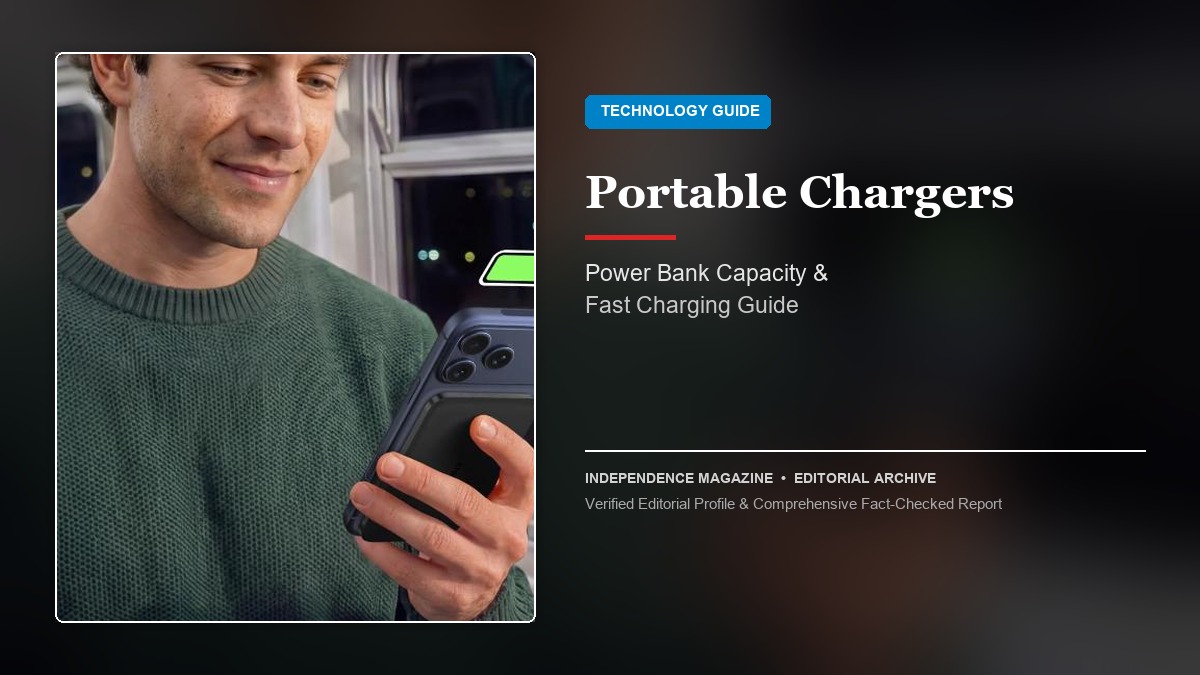
A portable phone charger should offer between 5,000mAh and 20,000mAh capacity depending on usage: compact 5,000mAh units provide an emergency pocket charge, 10,000mAh models deliver 1.5 to 2 full smartphone recharges for daily commuting, and 20,000mAh packs supply multi-day power while staying strictly within the TSA 100-watt-hour airline carry-on limit. Choosing the correct unit requires matching battery capacity with USB Power Delivery wattage to ensure fast, safe recharging.
In an era where personal devices handle everything from navigation and airline boarding passes to remote workplace communication and contactless payments, running out of battery is no longer a mere inconvenience. It interrupts productivity and creates unnecessary travel stress. Yet walking into an electronics retailer or browsing online marketplaces reveals an overwhelming array of external battery packs with confusing numbers, conflicting wattage standards, and exaggerated marketing claims.
Just as discerning consumers evaluate ingredients before purchasing daily wellness items like herbal hair care solutions, choosing a reliable portable power bank requires looking past headline milliamp-hour numbers to inspect battery cell chemistry, thermal regulation, and actual usable efficiency.
Demystifying Rated Capacity Versus Real-World Usable Energy
The single most widespread misconception among power bank shoppers involves the milliamp-hour (mAh) figure printed prominently on the retail box. When a manufacturer advertises a 10,000mAh external battery, casual buyers assume the device will fully replenish a 3,300mAh smartphone battery exactly three times. In real-world operation, this mathematical assumption fails because internal lithium-ion battery cells operate at a nominal voltage of 3.7 volts, whereas standard USB transmission occurs at 5 volts, 9 volts, or higher voltages depending on fast-charging negotiation.
The voltage conversion process from 3.7V up to 5V (and back down to the receiving phone's internal battery level) generates electrical resistance and heat. Furthermore, circuit board inefficiencies, cable resistance, and battery chemical loss reduce usable output. Under typical operating conditions, high-quality power banks exhibit an efficiency conversion rate between 65 percent and 72 percent. Therefore, a 10,000mAh power bank yields roughly 6,500mAh to 7,000mAh of practical, transferable energy. Understanding this fundamental engineering reality prevents disappointment and guides realistic capacity planning.
Charging Speed: Why Output Wattage Matters More Than Capacity
While milliamp-hours dictate how much total energy a power bank holds, wattage determines how rapidly that energy transfers into your device. In previous hardware generations, standard USB ports provided a sluggish 5 watts (5V at 1A) or 10 watts (5V at 2A), requiring upwards of three hours to charge a contemporary smartphone. Today, fast charging is an indispensable requirement rather than a premium luxury.
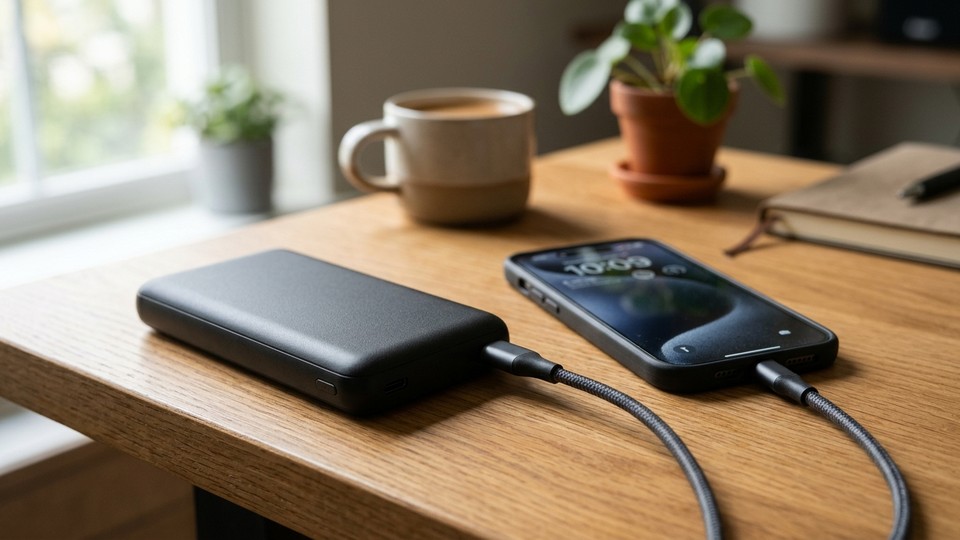
To benefit from rapid charging, consumers should look for chargers featuring USB Power Delivery (USB-PD) protocols through a bidirectional USB Type-C port. For modern Apple iPhones and Google Pixel devices, a minimum output of 20 watts enables zero-to-fifty percent charging within roughly thirty minutes. Samsung Galaxy devices frequently utilize Programmable Power Supply (PPS) protocols requiring 25W to 45W for optimal fast charging. When shopping, always verify that the manufacturer states dedicated single-port output wattage rather than a combined aggregate total across multiple ports.
Magnetic Wireless Versus Cable Charging: Trade-offs in Convenience and Heat
The introduction of magnetic wireless charging systems—such as Apple MagSafe and Qi2 standards—has revolutionized daily convenience. Magnetic battery packs snap directly onto the back of compatible phones without dangling cables, making them ideal for concerts, theme parks, or crowded public transportation where handling separate accessories is awkward.
However, wireless charging carries significant physical trade-offs. Induction charging is inherently less energy-efficient than direct physical wire conduction, shedding up to 30 percent more power as ambient heat. This heat not only slows the charging rate as the phone throttles intake to protect its battery health, but it also reduces the overall number of charges extracted from the power bank. For maximum speed, energy efficiency, and emergency reliability, carrying a short 6-inch braided USB-C cable remains the superior technical choice.
Airline Regulations and TSA 100-Watt-Hour Safety Rules
Frequent flyers must pay strict attention to aviation safety guidelines established by the Federal Aviation Administration (FAA), the Transportation Security Administration (TSA), and the International Air Transport Association (IATA). Because lithium-ion batteries carry a thermal runaway risk if damaged or punctured, airline regulations strictly forbid placing portable power banks inside checked luggage. All battery packs must be transported in carry-on baggage exclusively.
Furthermore, air travelers are permitted to carry external batteries without prior airline approval only if their capacity does not exceed 100 watt-hours (Wh). To calculate the watt-hour rating of any power bank, multiply its milliamp-hour rating by 3.7 (nominal cell voltage) and divide by 1,000. Under this standard formula:
(26,800 mAh × 3.7 V) / 1,000 = 99.16 Watt-hours
Consequently, 26,800mAh represents the legal maximum capacity for standard consumer flight travel. Carrying batteries between 101Wh and 160Wh requires explicit airline pre-authorization, while anything over 160Wh is completely prohibited on passenger aircraft.
Essential Safety Features and Long-Term Maintenance
Low-cost counterfeit or uncertified power banks flood online discount storefronts, presenting serious fire hazards due to recycled lithium cells and absent safety circuitry. When selecting a power bank, prioritize units with verifiable safety certifications including UL (Underwriters Laboratories), CE, FCC, and RoHS compliance. Reputable brands incorporate multi-protection chips that guard against over-voltage, short-circuiting, over-current, and elevated internal operating temperatures.
To prolong the operational lifespan of your portable charger, avoid storing the device in extreme environments, such as parked car glove compartments during hot summer afternoons or freezing winter nights. Additionally, lithium-polymer cells experience minimal degradation when maintained between 20 percent and 80 percent charge levels. If storing a power bank for several months between vacations, discharge it to approximately 50 percent and recharge it every four months to maintain chemical stability.
Summary Checklist: Finding Your Ideal Match
To finalize your buying decision, evaluate your primary lifestyle routine against three straightforward questions:
- Daily Commuter or Night Out: Opt for an ultra-compact 5,000mAh magnetic pack or a slim 10,000mAh brick weighing under 200 grams that slides easily into a jacket pocket.
- Business Traveler or Long Excursions: Select a 10,000mAh to 15,000mAh model featuring at least 20W to 30W USB-PD output, dual USB-C ports, and passthrough charging capabilities.
- Digital Nomad or Outdoor Enthusiast: Choose a rugged 20,000mAh to 26,800mAh high-output brick delivering 65W to 100W, capable of recharging both your laptop and phone simultaneously while adhering to TSA limits.
Frequently Asked Questions
A high-quality 10,000mAh power bank will fully recharge a modern smartphone approximately 1.8 to 2.2 times, depending on the phone's battery size and whether you use the phone while charging.
Yes. A 20,000mAh battery equates to roughly 74 watt-hours, well under the TSA and FAA 100-watt-hour limit. However, it must be kept inside your carry-on bag and is strictly prohibited in checked luggage.
No. Modern smartphones and certified USB-PD chargers communicate dynamically to regulate voltage and current. The phone only draws the maximum wattage its battery management system safely permits.
Passthrough charging allows the external battery to recharge itself while simultaneously supplying power to a connected phone or tablet from a single wall outlet.
Electromagnetic induction generates ambient heat due to energy transfer resistance between coils, making wireless battery packs run warmer and operate less efficiently than wired connections.
Most reputable lithium-polymer power banks maintain over 80 percent of original capacity for 300 to 500 complete discharge-recharge cycles, representing approximately two to three years of frequent use.
Related Lifestyle & Practical Guides



Sarah Jenkins
Sarah Jenkins has covered international arts, consumer technology investigations, and cultural biographies for premier national publications since 2011.